
Why Use Washers? A Technical Guide to Washer Types (Standard, Hardened, Belleville, Lock, and Velocity)
Washers may be small and often overlooked, but they play a critical role in bolted joints. In engineering applications, using the right washer can mean the difference between a reliable connection and a failed assembly.
Why use a washer at all? A washer’s primary job is to enhance the performance of a bolted joint by distributing loads, protecting surfaces, and sometimes adding special functions like locking or spring action. This article will explain why washers are essential and dive into the different types of washers – from everyday flat washers to specialized solutions like Belleville spring washers, lock washers, hardened structural washers, and even the innovative Velocity Washer.
Why Washers Matter in Bolted Joints
When a bolt and nut clamp two components together, enormous forces are concentrated under the bolt head and nut. Without a washer, these forces focus on a small area, which can crush softer materials, deform surfaces, or loosen over time. Washers address these issues in several ways:
Distributing Load: A flat washer spreads the clamping force of the bolt over a wider area, preventing the nut or bolt head from digging into the material. This is especially important for softer materials (like aluminum, wood, or plastic) which could otherwise be damaged, and for any joint where you want to avoid localized stress.
Protecting Surfaces: Washers act as a sacrificial barrier between the fastener and the workpiece. As the nut or bolt is tightened and rotates, it can scratch or gall the surface underneath. A washer takes that abuse instead, preserving the integrity and finish of the parts being joined.
Maintaining Clamp Force: Some specialized washers (spring types) can maintain tension in a joint despite relaxation, thermal expansion, or vibration. They behave like springs, continuously pushing back to keep the bolted joint tight when factors would otherwise cause it to lose preload.
Preventing Loosening: Other washers are designed to resist the rotation of a nut or bolt under vibration. These lock washers use their shape or teeth to bite into surfaces or provide friction, making it harder for a fastener to spin loose inadvertently.
Easing Maintenance: Newer washer innovations can even solve problems like thread galling (seizure of bolts/nuts) and make disassembly much faster and safer. For instance, the Velocity Washer is a modern solution that prevents galling and allows bolts to be undone with unprecedented speed, improving maintenance turnaround times.
In short, washers are not just “spacers” – they are engineering components that improve the reliability and longevity of bolted joints. By selecting the appropriate washer type for your application, you can ensure proper load distribution, preserve joint integrity, and add functionalities such as locking or spring action. Below we’ll explore the most common washer types, their technical characteristics, and when to use each one.
Common Washer Types and Their Functions:
Standard Flat Washer (Plain Washer): A simple flat disc that distributes load and protects surfaces. Ideal for general use to prevent material damage and increase the bearing area under the bolt head or nut.
Hardened Washer (Structural Washer): A high-strength flat washer, heat-treated for hardness. Used with high-tensile bolts to prevent embedment and maintain preload in heavy-duty structural connections.
Lock Washer (Split or Toothed): A washer with a spring-like shape or teeth that grips surfaces. Its purpose is to resist loosening due to vibration by adding friction or a locking bite. Common in machinery and automotive assemblies.
Belleville Washer (Disc Spring): A conical spring washer that flattens under load. It provides a spring force to maintain clamp load in the face of thermal expansion, joint relaxation, or vibration. Often used to keep bolted joints tight despite temperature changes or creep.
Velocity Washer: An advanced patented washer design that prevents thread galling and enables extremely fast bolt disassembly. It contains an internal mechanism that releases bolt tension with a small turn, acting like a quick-release for heavy bolted joints (more on this innovative type later).
Now, let’s delve into each of these categories in detail and discuss how they work and where you would use them in engineering practice.
Standard Flat Washers (Plain Washers)
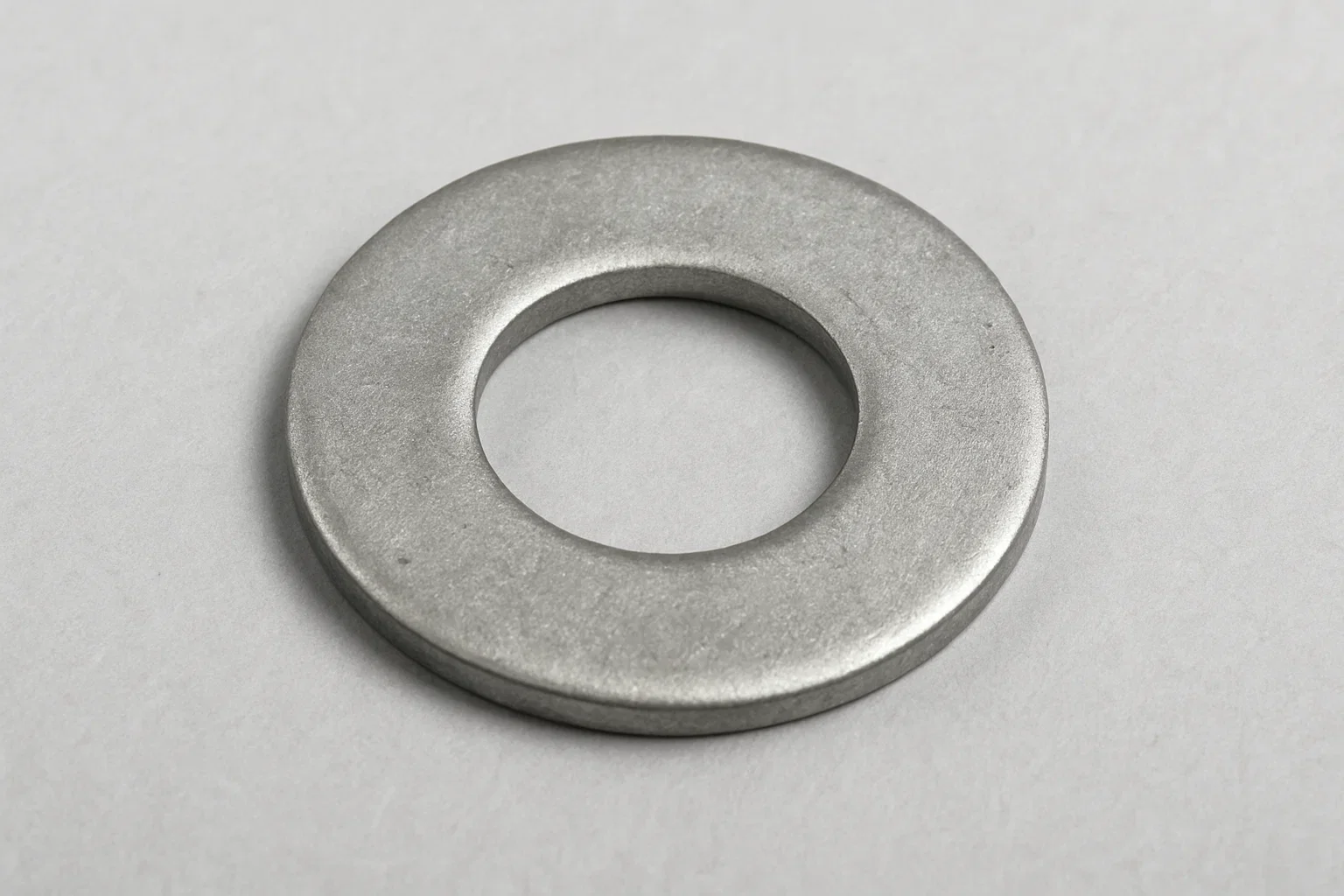
Description & Purpose: The standard flat washer is the most common type of washer – a flat metal disc with a hole in the middle. Flat washers are typically made of steel (plain, zinc-plated, or stainless) and come in various sizes and outer diameters. Their primary function is to distribute the load from the bolt or nut over a larger area. By increasing the bearing surface, a flat washer prevents the concentrated stress that could otherwise crush a surface or pull a fastener head through the material. This is crucial when bolting into softer materials like wood, aluminum, or even mild steel, and when using bolts on thin sheet metal or oversized holes.
How Flat Washers Are Used: In practice, a flat washer is placed under the part that will rotate during tightening – usually under the nut (if the nut is turned) or under the bolt head (if the bolt is being turned into a threaded hole). This placement reduces friction between the turning component and the joint surface, which not only protects the surface finish but also results in more consistent clamp force. The washer provides a smooth, hard surface for the nut or bolt head to bear against, aiding in achieving the correct torque-tension relationship. In many cases, especially with softer underlayment, a flat washer also helps prevent galling between the bolt head/nut and the part by taking on the friction.
Standards & Sizes: Engineers will encounter flat washers under various standard designations. In the United States, USS (United States Standard) and SAE (Society of Automotive Engineers) flat washers are common for inch-size hardware. USS washers have a larger outer diameter (OD) for greater load distribution, whereas SAE washers have a smaller OD for tighter clearances around the fastener. Both are covered under ASME B18.22.1. For metric hardware, flat washers are standardized by ISO; for example, ISO 7089 is a common metric flat washer standard (regular flat washers), and ISO 7093-1 covers “large series” flat washers with bigger OD for more load spreading. These standards ensure washers have consistent dimensions and material properties suitable for general-purpose use.
Materials and Finishes: Standard flat washers come in a range of materials and coatings depending on the environment:
Steel washers (often low carbon steel) are used in dry indoor applications or where high strength is not critical. They might be plain (uncoated) or zinc-plated for light corrosion resistance.
Stainless steel washers (typically A2 stainless which is 304 stainless, or A4 which is 316 marine grade) are common when corrosion is a concern or for outdoor use, as they resist rust. Engineers choose A4 stainless for marine or high-salinity environments, and A2 for general outdoor or corrosive environments.
Galvanized washers (hot-dip galvanized) are used with galvanized bolts in outdoor structural applications to prevent galvanic corrosion mismatch. Hot-dip galvanizing leaves a thick protective zinc layer, so galvanized washers are slightly thicker and have a larger hole to accommodate the thicker coatings on bolts and nuts.
When to Use Standard Flat Washers: Almost any bolted joint can benefit from a flat washer unless there’s a specific reason not to use one (such as space constraints or a need for direct metal-to-metal contact for electrical grounding without intervening layers). Use flat washers:
To protect painted or finished surfaces from being marred by the turning nut/bolt.
To spread the load on materials that might deform, such as wood framing (preventing the nut from sinking into the wood) or on sheet metal assemblies (preventing pull-through).
To cover large or slotted holes and ensure the nut/bolt has a solid surface to clamp. (Oversized or slotted clearance holes are common in construction; a washer bridges the gap so the nut or head isn’t partly over an empty hole space.)
Whenever specified by standards or best practices – for example, many mechanical and plumbing assemblies use flat washers under bolt heads and nuts by default for a more reliable connection. Even in cases where strength isn’t an issue, washers make disassembly easier (the part’s surface won’t be scarred or stuck to the fastener).
Flat washers are truly the workhorse of washers: simple, inexpensive, but very effective at what they do. However, for high-strength or critical joints, a regular flat washer may not be enough – that’s where hardened washers come into play.
Hardened Washers (Structural Hardened Flat Washers)
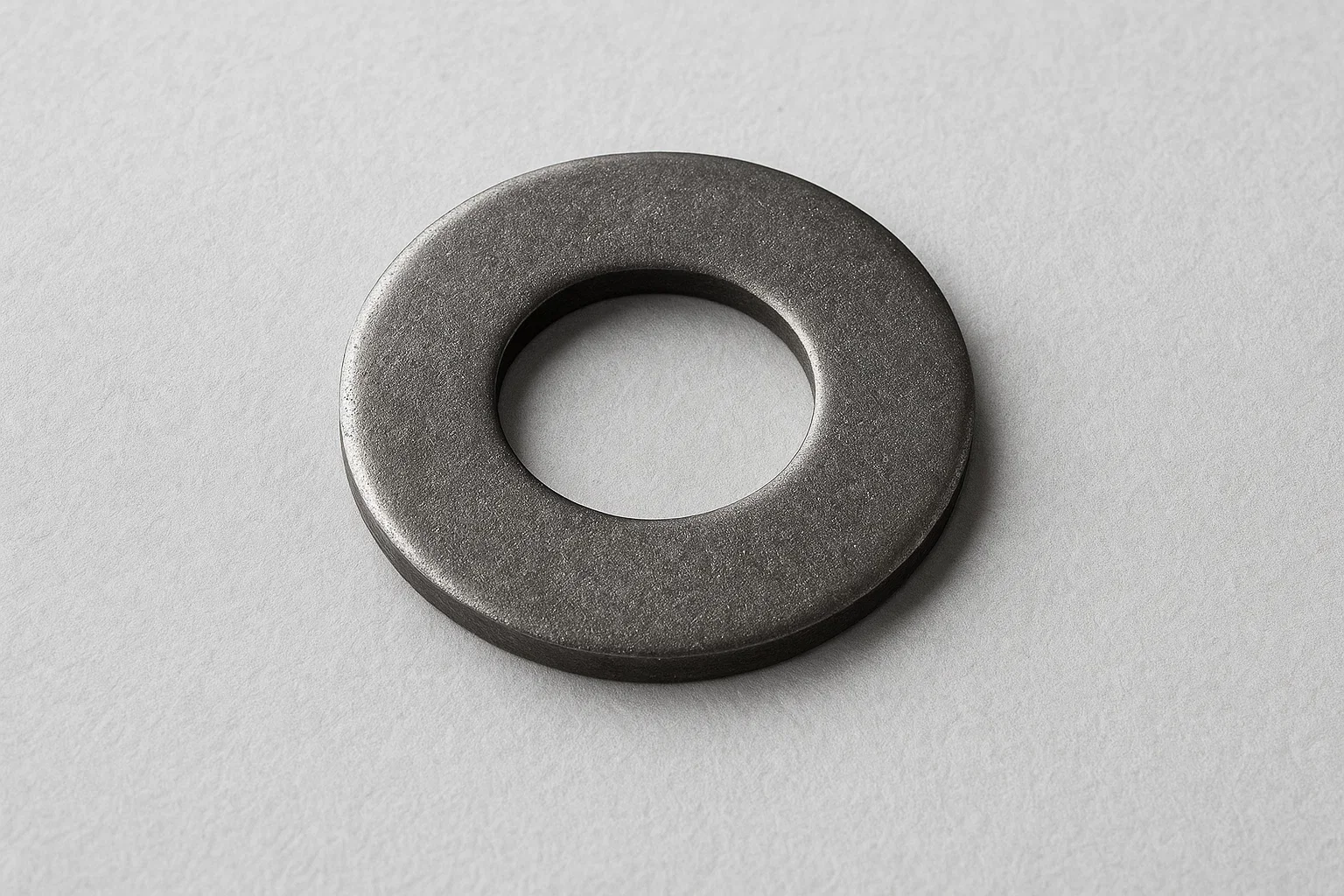
When bolts get bigger and loads get higher, standard mild-steel washers can become the weak link. Hardened washers are flat washers made from high-strength steel that has been heat-treated (hardened) to a high grade of hardness, typically in the range of Rockwell C38 to C45. The result is a washer that is much stronger and more resistant to deformation or “embedding” under high compressive forces. In critical bolted joints – such as structural steel connections, heavy equipment assemblies, or any high-preload bolt – using a hardened washer is often required to maintain the integrity of the joint.
Why Hardness Matters: Imagine tightening a Grade 8 or Class 10.9 high-strength bolt to its proper torque. The bolt will exert a tremendous compressive force on whatever is under the nut or head. If a soft washer (or soft joint material) is beneath it, that washer can embed or deform: the intense pressure causes the washer to literally dent and conform into the surface or to compress in thickness. This leads to a loss of tension in the bolt (loss of preload) as the materials “settle.” A hardened washer prevents that scenario because it’s as hard or harder than the bolt and the surfaces – it won’t significantly yield under the load. By maintaining its shape and thickness, a hardened washer preserves the clamp force that was applied during tightening. Essentially, hardened washers ensure that the bolt’s tension (preload) is not lost due to washer crushing or surface yielding over time.
Applications & Standards: Hardened washers are synonymous with structural bolting. For example, in structural steel construction (buildings, bridges) using high-strength bolts like ASTM F3125 Grade A325 or A490, standards require the use of ASTM F436 hardened washers. These washers are made of quenched and tempered steel and are significantly harder than standard hardware store washers. They are also often a bit smaller in outer diameter than common flat washers – this is by design so that they fit in tight clustered bolt patterns on steel plates and don’t overlap edges. Metric equivalents exist too: for instance, large OD hardened washers per ISO 7093-1/7094 are used with metric property class 8.8, 10.9, or 12.9 bolts when specified. Any time a specification or drawing calls for a “hardened washer” or a specific standard like F436, it indicates the need for these high-strength washers to support the bolt’s load.
Characteristics of Hardened Washers:
Material and Treatment: Typically medium carbon steel or alloy steel, heat-treated to a high hardness. For example, ASTM F436 Type 1 washers are made of carbon steel hardened to HRC 38-45. There are also Type 3 weathering steel versions for use with weathering bolts (which form a protective rust patina).
Strength: A hardened washer has a compressive strength on par with hardened steel, meaning it will not compress or cup under extreme loads. It’s designed to be stronger than the yield strength of the bolt – the bolt would stretch (yield) before the washer would deform.
Finish: Often available in plain (oil-coated), mechanically galvanized, hot-dip galvanized, or sometimes zinc-plated if needed. When using galvanized high-strength bolts, you must use correspondingly galvanized hardened washers to match. The coating slightly reduces hardness but is accounted for in standards.
Dimensions: Typically thicker than standard washers for the same bolt size, and often a smaller outer diameter than a standard flat washer to ensure a firm contact area directly under the bolt/nut without overlaps. This concentrated but very rigid support is sufficient for hard steel surfaces. If the surface under the washer is softer (like wood or softer metal), sometimes a larger washer (hardened SAE or structural fender washer) might be used to spread load but still hardened.
When to Use Hardened Washers: Use hardened washers whenever you have high-strength fasteners or critical joints where maintaining tension is vital. This includes:
Structural connections (steel beams, columns, flanges) – building codes typically mandate hardened washers under turned elements for all high-strength bolts.
Heavy machinery and equipment – for example, large bolted joints in engines, gearboxes, or pressurized flanges often need hardened washers to avoid any loss of clamp load.
Anchor bolts and concrete fasteners – many heavy-duty anchor rod assemblies use hardened plate washers to safely distribute load on concrete while staying rigid under tension.
Anywhere a standard washer might “squish” – if you find that a regular washer is bending or cupping when torqued, that’s a clear sign you should switch to a hardened washer.
In summary, hardened washers are the go-to for high-stress applications. They preserve the bolt preload and prevent the subtle losses of tension that can occur with softer washers. By keeping the joint tight and secure under extreme loads, hardened washers contribute to the long-term reliability of critical bolted connections.
Lock Washers (Split Lock and Toothed Lock Washers)
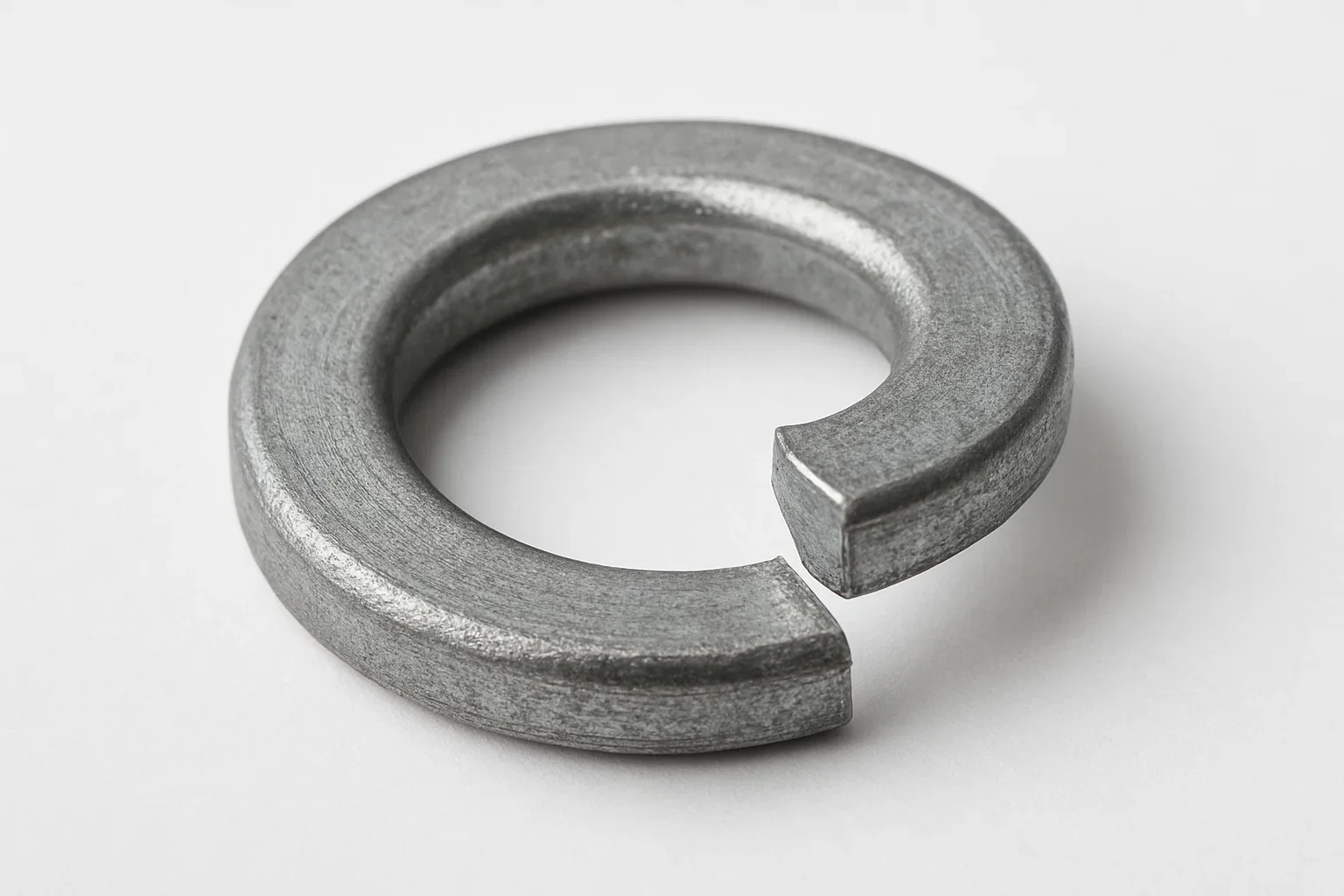
One common challenge in bolted assemblies is vibration or movement causing nuts and bolts to gradually loosen. Lock washers are designed to address this issue by preventing or slowing down the rotation of a fastener. Unlike plain flat washers, lock washers have special shapes or features that create extra friction or a mechanical locking action in the joint. The two traditional categories of lock washers are split (helical) lock washers and toothed (serrated) lock washers, each working a bit differently:
Split Lock Washers (Helical Spring Washers): This is the classic lock washer seen in many hardware kits – a ring of steel that is split at one point and slightly twisted into a helical shape. When you tighten a nut down on a split washer, the washer flattens and the sharp edges at the split bite into the underside of the nut and the top of the joint surface. The idea is that the washer’s spring action pushes back against the nut as it tries to loosen, and the biting edges increase friction and make it harder for the nut to turn. Essentially, it adds a spring tension and edge friction to resist vibrations backing the fastener out. These are often used in automotive and general machinery where slight to moderate vibration is present. For example, you might find split lock washers on motor mounts, small machinery, or household appliances where the fastener should stay tight during operation. Split lock washers conform to standards like ASME B18.21.1 (for inch sizes) and DIN 127 (for metric), and there are variants like high-collar lock washers (DIN 7980) for use under socket head cap screws.
Toothed Lock Washers (Internal/External Tooth): Toothed lock washers are flat rings with serrated teeth either on the inside edge, outside edge, or both. Internal-tooth washers have teeth around the inner hole that bite into the screw or nut and the surface beneath, and are often used under screw heads or nuts in electrical connections (the teeth can cut through paint or oxidation for good contact, hence common in grounding applications). External-tooth washers have teeth on the outer edge, providing a wider circle of biting points; they work well under larger head bolts or nuts where the washer’s outside teeth can dig into the mounting surface. There are also combination tooth washers with teeth on both sides or both inner and outer edges for maximum grip. These create a locking action by biting firmly into both the fastener and the part being clamped, which prevents rotation. They are typically used in thinner assemblies, sheet metal, or where you want a very low-profile lock washer. One example is using an internal tooth lock washer under a screw head when mounting an electronic chassis – it keeps the screw from loosening and also helps maintain electrical continuity by scraping off any paint. Standards like ASME B18.21.1 also cover toothed washers (sometimes called star washers).
Effectiveness and Considerations: It’s important for engineers to know that while traditional lock washers do provide some resistance to loosening, they are not a foolproof solution for high-vibration or safety-critical assemblies. In fact, studies and practical experience have shown that split lock washers can lose their effectiveness once the joint starts to loosen even a little (the washer flattens out and no longer pushes on the nut). Similarly, if a bolt is not properly tightened (proper preload), a lock washer alone won’t save it from coming loose. Thus, lock washers are best seen as supplemental locking devices to augment a properly tightened joint, rather than a guarantee against loosening.
For truly critical applications where vibration is severe (for example, aerospace, automotive suspension, or heavy machinery that sees continuous shock loads), engineers often use additional or alternative locking methods:
Prevailing-torque lock nuts (nylock nuts, all-metal lock nuts): These nuts have inbuilt features (like a nylon insert or deformed threads) that create friction on the bolt threads, making them resist turning. They often outperform simple lock washers.
Chemical threadlockers: Applying a thread-locking adhesive (like Loctite) on the threads can lock a fastener in place by bonding it, though this can complicate removal and is more for permanent/semi-permanent assemblies.
Wedge-lock washers: A more modern washer solution is the cam-locking washer pair. These come as a pair of washers with interlocking cams on one side and teeth on the other; when the nut tries to loosen, the cams ramp up and actually increase tension, preventing rotation. They are highly effective but more expensive, used in high-vibration critical joints.
That said, split and toothed lock washers remain widely used in many industries because they are simple, cheap, and fit in the same footprint as a standard washer. They are perfectly adequate for many non-critical applications or where only mild vibration is expected. For example, assembling a guard or cover on a machine – you might use a lock washer to keep the screws from backing out over time. Or on a small engine, lock washers on bolts can help ensure things stay tight despite engine vibration.
Tips for Using Lock Washers:
Always tighten the bolt/nut to the proper torque. The lock washer should be fully flattened in the tightened joint; that’s when it’s doing its job. If it’s not compressed, it’s not engaging properly.
Use lock washers with a hard surface under them. If you put a lock washer against a very soft surface (like plastic or soft wood), the teeth or edges may chew it up too much or not grip effectively. In such cases, a lock washer might not help, and an alternative locking method might be better.
For internal tooth washers used in electrical grounding, ensure the tooth washer is placed between the connector and the painted surface so it can bite into both. The goal there is both locking and electrical contact by cutting through paint.
Be aware that lock washers can lose effectiveness after reuse. A split washer that’s been flattened and removed may not have the same spring as a new one. It’s often best practice to replace lock washers rather than reusing them if you’ve taken the joint apart, especially in critical spots.
In summary, lock washers provide a simple mechanical way to reduce loosening in bolted joints subject to vibration or movement. They serve as a kind of insurance for joints that need to stay tight. However, they are not magical – proper joint design (adequate preload, correct torque) and sometimes more advanced locking solutions should be considered for high-stakes situations. Use split or toothed lock washers for an added measure of security in moderately demanding applications, and know their limits.
Belleville Washers (Conical Spring Washers)
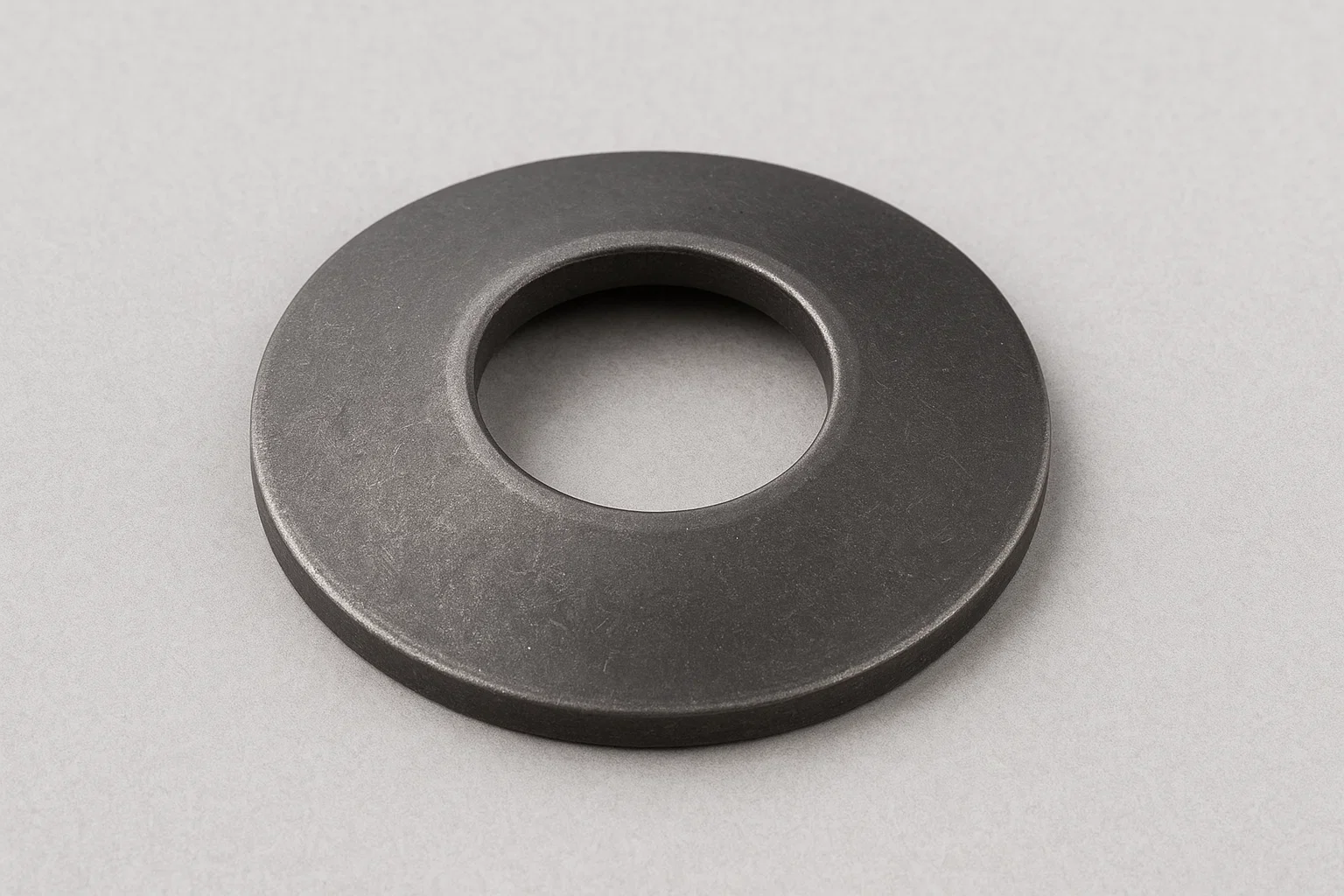
Belleville washers, also known as disc springs or conical spring washers, are a different breed of washer designed to provide spring action in a bolted joint. Unlike a flat washer, a Belleville washer is shaped like a shallow cone or dish. When you compress that cone (by tightening a bolt through it), it flattens out slightly and exerts a force like a spring. This unique behavior makes Belleville washers extremely useful for maintaining tension in a joint and absorbing dimensional changes or shock.
How Belleville Washers Work: Picture a conical disk pressed under a bolt head or nut. As the bolt is tightened, the conical washer flattens incrementally, pushing back against the nut with a spring force. This stored spring force means that if the joint tries to loosen or if any gap develops (say, the materials thin out due to creep or the gasket settles), the Belleville washer will expand slightly to take up the slack, continuing to press on the joint. Essentially, it acts like a constant-force spring maintaining clamp load. Engineers can choose Belleville washers with specific spring rates and deflection capacities suitable for the bolt size and desired preload. Unlike a split lock washer (which also has a springy quality but very limited deflection), a Belleville washer can be designed to provide a significant preload over a range of movement – ensuring the bolt never goes completely slack as things expand, contract, or vibrate.
Key Uses and Advantages:
Maintaining Preload: Belleville washers are often used where bolt preload must be maintained rigorously despite changes in conditions. For example, in high-temperature applications, bolts and components expand and contract; a Belleville washer can compensate for thermal expansion or contraction, preventing the bolt from becoming loose when things cool down. Similarly, in a joint with a compressible gasket (like a high-pressure flange with a gasket), the gasket might compress or creep over time under load. A Belleville spring washer can keep pushing as the gasket thins, preserving seal pressure. This practice is sometimes called “live loading” a flange – commonly done in steam systems, valves, and process piping in power plants or chemical plants.
Vibration Damping: While Belleville washers are not primarily lock washers, by maintaining higher tension on the bolt they can help prevent a nut from vibrating loose. The idea is that as long as there is strong clamp force, the joint’s friction prevents rotation. In environments with cyclic loading or vibration, Bellevilles can absorb some of the dynamic changes, acting almost like a shock absorber for the bolt tension. This can reduce the risk of fatigue as well. For instance, on an electrical connection or PCB mount, a Belleville washer can keep a consistent contact force even if materials expand with heat, and also reduce loosening under vibration.
Heavy Load Springs in Small Package: Disc springs can generate very large forces in a small space compared to coil springs. They are used not only as washers but in any application where a high-force spring is needed in a tight spot. In bolting terms, it means you can get a very stiff spring effect under a bolt without needing a tall spring stack. Also, multiple Belleville washers can be stacked in various configurations: stacking in parallel (multiple washers stacked the same way) increases the force (spring rate) but not the deflection much, whereas stacking in series (alternating orientation) increases the deflection (travel) while keeping force the same. Engineers use stacking to fine-tune the spring characteristics required for a particular joint.
Standards and Types: Belleville washers for general bolting use are standardized (for example, DIN 6796 specifies conical spring washers for bolted joints). There are also precise disc spring standards like DIN 2093, which categorize disc springs by size and load characteristics for more general mechanical spring applications. Typically, Belleville washers are made of spring steel (high carbon steel) or alloy steel, and they can also be made from stainless or other alloys for corrosion resistance or high-temperature use (e.g., Inconel Belleville washers in high-temperature flange kits). They are usually heat treated for spring properties. When used in bolting, they are selected to match the bolt size (inner diameter accommodates the bolt) and the desired load. A properly chosen Belleville will exert a preload slightly higher than the desired minimum clamp load so that even if the bolt tries to relax, the spring is still engaged.
Examples of Use Cases:
Thermal Cycles: In a steam turbine or boiler flange where temperatures swing from ambient to hundreds of degrees and back, bolts naturally relax as metal expands. Belleville washers are placed under the nuts on the flange studs so that when things cool and the bolt would loosen, the spring pushes up to maintain force. This prevents leakage and the need to constantly re-torque bolts after thermal cycles.
Electrical Contacts: In high-power electrical connections, Belleville washers maintain pressure on contact surfaces to ensure low resistance. Over time, copper might creep or thermal expansion can loosen a bolted bus bar connection – a Belleville washer prevents that by keeping sustained pressure.
Vibration-Prone Machinery: For equipment subject to continuous vibration (like pumps, compressors, or mining equipment), using Belleville washers can maintain bolt tension longer than a rigid joint would, delaying or preventing the onset of loosening.
Bolts prone to fatigue: By cushioning the bolt against shock loading, Belleville washers can reduce the peak stresses the bolt sees when loads fluctuate, thus mitigating fatigue crack initiation in the bolt. This is why sometimes Bellevilles are part of a design to increase a joint’s fatigue life.
Using Belleville Washers Correctly: It’s crucial to install Belleville washers in the correct orientation – typically with the larger diameter end against the surface that needs support (for a nut, that means the wide end against the nut and the smaller end against the joint surface). If multiple are stacked, follow the specified pattern (|| for parallel, >< for series, or combinations like |><| ). Over-compressing a Belleville (flattening it completely during tightening) usually should be avoided unless the washer is specifically sized to be flattened at the target torque – flattening can degrade its spring performance. Ideally, the bolt is torqued such that the Belleville is compressed some percentage of its total deflection, providing the needed preload and still allowing some spring travel if the joint tries to relax.
In summary, Belleville washers are a powerful tool for maintaining clamp load in dynamic conditions. They turn a bolted joint into a spring-loaded system, capable of adapting to expansion, contraction, and vibration. For engineers dealing with joints that cannot be allowed to work loose or lose tension, Bellevilles offer a smart solution. They are widely used in industrial and high-performance settings to ensure longevity and reliability of bolted connections.
Velocity Washer – A Modern Solution to Prevent Galling and Speed Up Maintenance
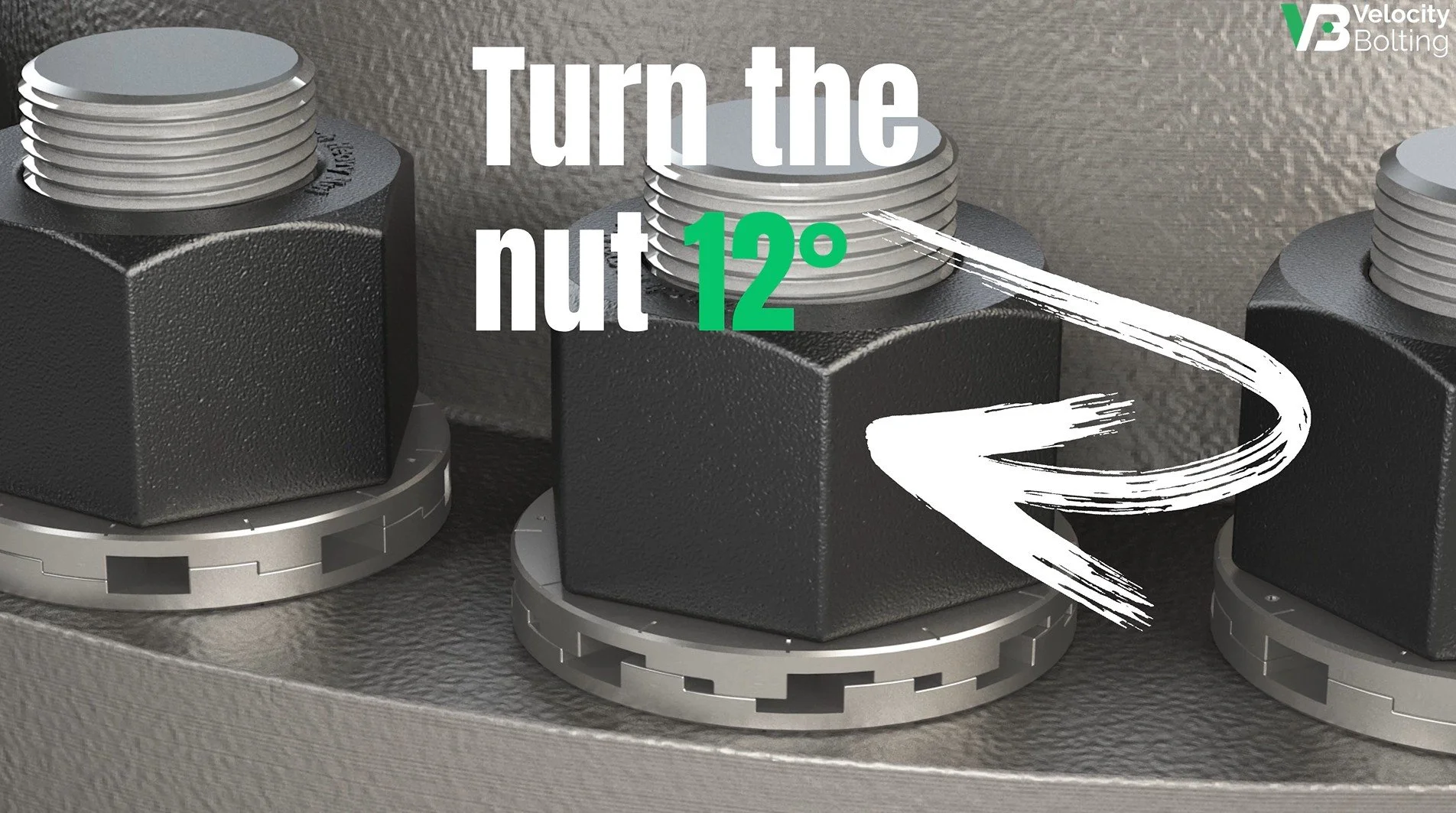
In the world of bolting innovations, the Velocity Washer stands out as a recent engineering development aimed at solving a specific and costly problem: thread galling in heavy bolted joints. A Velocity Washer is not your typical washer – it’s a patented mechanical washer with an internal mechanism that dramatically changes how a bolted joint behaves during disassembly. While the earlier washer types we discussed focus on distributing load, locking, or maintaining tension, the Velocity Washer is all about easy removal and anti-seize function. It has quickly gained attention in industries where large bolts (think big pressure vessels, reactors, turbines) can be a nightmare to take apart due to seized nuts.
What is Galling and Why is it a Problem? Galling is a form of severe adhesive wear often described as “cold welding.” When two metal surfaces slide against each other under high pressure (like the threads of a bolt and nut during tightening or loosening), material can microscopically tear and transfer between the surfaces. In certain conditions – especially with stainless steel fasteners or large-diameter, high-torque bolts – this can cause the nut and bolt to fuse together. Once a bolt is galled and seized, conventional removal becomes nearly impossible; even a strong wrench may not budge it. The typical recourse is cutting the bolt off (often with a torch or grinder), which is labor-intensive, time-consuming, and potentially hazardous. In industrial facilities, a single seized bolt on critical equipment can lead to hours or days of downtime. For example, large flange bolts in refineries or power plants have been known to take many hours each to remove when galled, resulting in massive losses in production time (which can equate to tens or hundreds of thousands of dollars per hour in lost output).
Enter the Velocity Washer – a washer specifically engineered to prevent galling and make bolt removal up to 30× faster. It looks similar to a thick hardened flat washer from the outside, but inside it contains a cleverly designed stepped mechanism. Here’s how it works:
During installation (tightening), the Velocity Washer functions just like a normal washer. You place it under the nut (on the side you’ll loosen later). It’s symmetric and easy to install - there’s no wrong orientation. As you tighten the nut, the washer’s internal mechanism does not activate; it remains solid and acts as a hardened washer, providing the usual load distribution and allowing you to torque the bolt to spec normally. The designers calibrated the surface finish and friction of the Velocity Washer to mimic that of a standard hardened washer, so the torque-tension relationship is unchanged. This means you don’t need any special procedures or tools to tighten a bolt with a Velocity Washer – the preload achieved is the same as usual. In normal operation, the joint behaves like any other; the Velocity Washer stays put and locked, sustaining the full clamp load without any issue.
During removal (loosening), the magic happens. When you go to loosen the nut, you only need to rotate it a very small amount initially (on the order of 10–15 degrees, which is just a fraction of a turn). That slight rotation causes the internal mechanism of the Velocity Washer to “pop” or release, effectively unstacking itself and removing almost all the tension from the bolt instantly. In other words, the washer internally creates a gap or step that takes the bolt load off. You’ll hear/feel a click as it happens. Now the bolt is effectively free – the nut is no longer being clamped tightly by thousands of pounds of force, so it can be spun off by hand or with a normal wrench easily. All the friction and heat that would normally occur from twisting a fully loaded nut (the scenario that causes galling) is eliminated. The nut isn’t pressing hard on the threads anymore, so it won’t seize; it just turns freely.
By preventing the high-friction sliding under load, the Velocity Washer prevents galling. Maintenance crews love this because it means no more torch cutting stuck nuts and no more fighting with breaker bars for hours. A job that used to take, say, 10 hours of wrestling with galled bolts might be done in 30 minutes because the nuts all spin right off after the quick release. The term “30× faster disassembly” is often quoted from real comparisons of using Velocity Washers vs. conventional hardware on large bolts.
Engineering and Performance: The Velocity Washer is made from high-strength alloy steel (for example, heat-treated 4140 steel), so it is extremely tough and as strong as traditional hardened washers. Engineers might wonder, does this mechanism compromise the joint during service? The answer from testing is no – Velocity Washers have been subjected to rigorous qualification tests including military shock and vibration tests (MIL-STD-167-1A and MIL-S-901D for those curious). They demonstrated that vibrations or dynamic loads during operation will not accidentally trigger the release mechanism. It only activates when a deliberate loosening rotation is applied. In vibration tests, Velocity Washers endured tens of thousands of high-G load cycles without self-loosening. They effectively behave like solid washers under normal conditions. Additionally, the load capacity is not reduced; the washer will take the full load of the bolt and more. In fact, because they’re made of very high-grade steel, the washer typically has a yield strength higher than that of the bolt itself, so it’s not the weak link.
Where Velocity Washers Are Used: This technology is particularly beneficial in industries where bolts are large, frequently removed, and prone to galling:
Oil & Gas and Petrochemical: Think reactor vessel covers, heat exchangers, large pipe flanges – these often use big studs (2″, 3″ diameter or more) that operate at high temperatures and can seize. Facilities that have adopted Velocity Washers on such joints have reported dramatic reductions in turnaround times. For instance, a refinery found that by using Velocity Washers on a heat exchanger flange, disassembly was nearly 95% faster and they saved days of maintenance time.
Power Generation: Turbines, boilers, steam lines – similar story. Any scheduled outage can be shortened by not having to battle galled bolts. Reducing downtime directly translates to more electricity generated and revenue saved.
Heavy Industrial Maintenance: Mining equipment, large presses, or any machinery where large bolts are taken apart for maintenance can benefit. Also, anywhere safety is a concern – eliminating the need for “hot bolting” (swapping bolts under load) or using grinders and torches improves worker safety significantly. Without seized bolts, there’s no need for cutting tools in tight, hazardous environments.
High-Value Equipment: Companies that measure downtime in big money (e.g., thousands of dollars per hour) have been early adopters. By preventing galling, they also avoid having to replace expensive studs and nuts each time; normally, a galled stud often has to be scrapped and new ones installed. With Velocity Washers, the bolts and nuts remain reusable because they don’t get damaged.
Using Velocity Washers: From an engineering perspective, designing in a Velocity Washer simply means specifying it in place of a standard washer on the side of the bolt you loosen. Only one Velocity Washer is needed per bolt. They are available in various sizes (commonly for large bolt diameters 3/4″ up to several inches, since smaller bolts are easier to handle by other means). No special tools, no re-training of the crew – they install and remove bolts the same way, just much faster on removal. The cost per washer is higher than a normal washer, of course, due to the product being individually precision CNC machined, but the savings in labor and downtime can be enormous, easily justifying the expense in industrial contexts.
In effect, the Velocity Washer is like the inverse of a lock washer: instead of preventing a nut from turning, it ensures that when you want the nut to turn, it can be removed effortlessly. It solves a very specific but widespread headache in maintenance engineering. For technical audiences, it’s an elegant solution to a tribological problem (galling) using a mechanical release principle. If you frequently deal with stubborn, seized bolts, this washer might be a game-changer in your toolbox.
Conclusion
Washers might not always get the spotlight in engineering discussions, but as we’ve seen, they are indispensable for robust bolted connections. To recap the key points:
Standard flat washers provide basic load distribution and surface protection, a must-have for preventing damage and ensuring a solid clamp in everyday assemblies.
Hardened washers step in for high-strength bolts and critical joints, maintaining preload by resisting compression and embedment. They keep heavy-duty connections tight and safe over the long haul.
Lock washers (split or toothed) offer a simple mechanical way to fight loosening under vibration. While not infallible, they add friction and biting grip that can be very useful in keeping nuts and bolts from rattling loose in machinery.
Belleville washers (disc springs) bring a spring constant into the joint, maintaining tension through thermal expansion, contraction, and relaxation. They are the choice for applications where bolts must not lose clamp force despite changing conditions, effectively improving reliability and service life.
Velocity Washers represent the cutting edge of washer technology, tailored for fast removal and anti-galling in large-scale industrial bolting. They illustrate how even a humble washer can be reinvented to solve modern engineering problems, saving enormous time and cost in maintenance-intensive fields.
When designing or maintaining any bolted system, it’s important for engineers to choose the right washer type for the job. Consider the demands on the joint: Does it need just load spreading, or does it face vibration? Is extreme preload involved? Will it see temperature swings or require frequent disassembly? By matching those needs to the appropriate washer – be it a plain flat washer for simplicity or a specialized solution like a Belleville or Velocity Washer – you ensure the connection remains secure and functional over its intended life.
In engineering, paying attention to these seemingly small details can prevent big headaches down the road. So, next time you reach for a bolt and nut, remember the washer and all the science and purpose packed into that unassuming ring of metal. It might just be the hero that keeps your project together (literally) and running smoothly. Happy bolting, and may your joints stay tight and trouble-free!
______
Disclaimer:
Portions of this article were generated with the assistance of ChatGPT, a large language model developed by OpenAI. The content is provided for informational purposes only and does not constitute professional, legal, financial, or academic advice. The views expressed do not necessarily reflect those of the author, and readers are encouraged to independently verify any information presented.
The AI-generated content has been reviewed and edited for clarity and accuracy where appropriate.